
A core task in RWSC’s Annual Work Plan is to prioritize and support regional research. This is accomplished by:
RWSC is advancing two regional wildlife research and monitoring projects with support from the Empire Wind 1 project, developed by Equinor, LLC, as included in the New York State Energy Research and Development Authority (NYSERDA) New York 4 solicitation for awarded Offshore Wind Renewable Energy Certificates.
These projects are the result of the robust evaluation and selection process conducted by RWSC for the February 2025 regional research and monitoring RFP. Both research projects have officially kicked off with administrative and coordination support from RWSC, NROC, and MARCO.
Each project is required to report progress to RWSC Subcommittees and maintain a published Data Management & Sharing Plan (DMSP). Read a profile and learn about the status of each project:
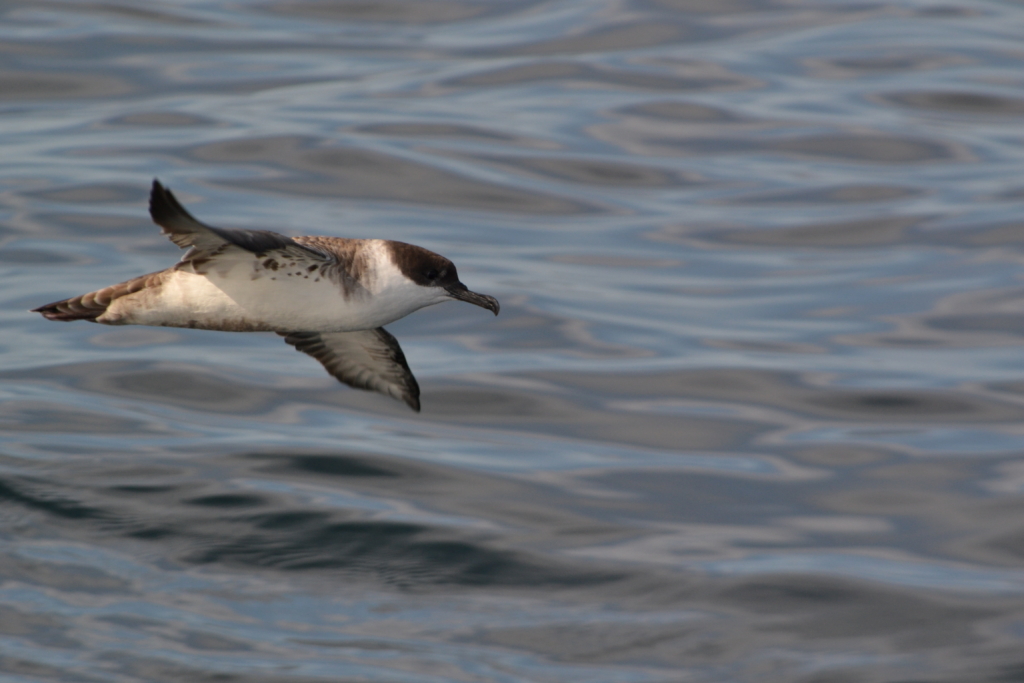
Avian Vulnerability Estimation and Power Analysis
Biodiversity Research Institute, Centre for Research on Ecological and Environmental Modeling (CREEM) – St. Andrews University, Normandeau Associates, and The Nature Conservancy
This two-year project will result in updates to the 2013 Atlantic avian vulnerability assessment, an analysis of species traits that may drive vulnerability, a quantitative vulnerability framework database, and a statistical power analysis to determine the most effective study design(s) for monitoring the effects of displacement on high-risk avian species in the New York/New Jersey Bight and southern New England waters. All outputs, code, and data generated by this project will be made available via GitHub and Zenodo within one year of product completion.
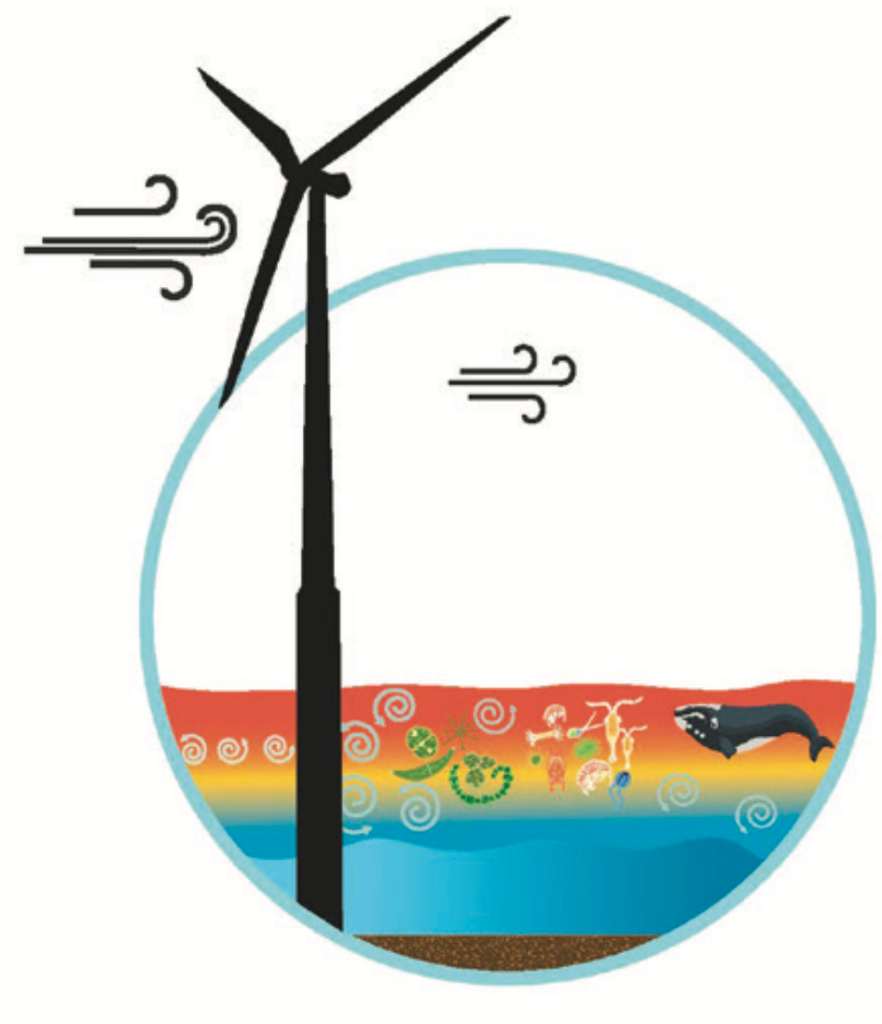
Coupled oceanic and atmospheric wake effects and their impact on nutrient supply and zooplankton community structure across turbine-, wind farm-, and regional-scales
Woods Hole Oceanographic Institution and Helmholtz-Zentrum Hereon
This three-year project will result in an improved understanding of the effects of offshore wind infrastructure on the pelagic ecosystem. The project team will use existing data to model the ocean and atmosphere with and without turbines to characterize perturbations in biogeochemical processes, phytoplankton and zooplankton biomass and growth. Model outputs will inform and be validated by new data collection by long-range autonomous underwater vehicles approximately every three months in wind farm areas that overlap with potential feeding hotspots for whales. The project outcomes will help build a picture of how hydrodynamics and whale prey aggregation may be influenced by the presence of wind farms. This project will leverage data and partnerships with the Commercial Fisheries Research Foundation, ongoing NOAA Fisheries surveys, Project Ocean W’aKEs, and the Wind Forecasting Improvement Project Phase 3. All model outputs, code, and data will be made available within one year of generation/collection via GitHub and the BCO-DMO (Biological and Chemical Oceanography Data Management Office) repository.